
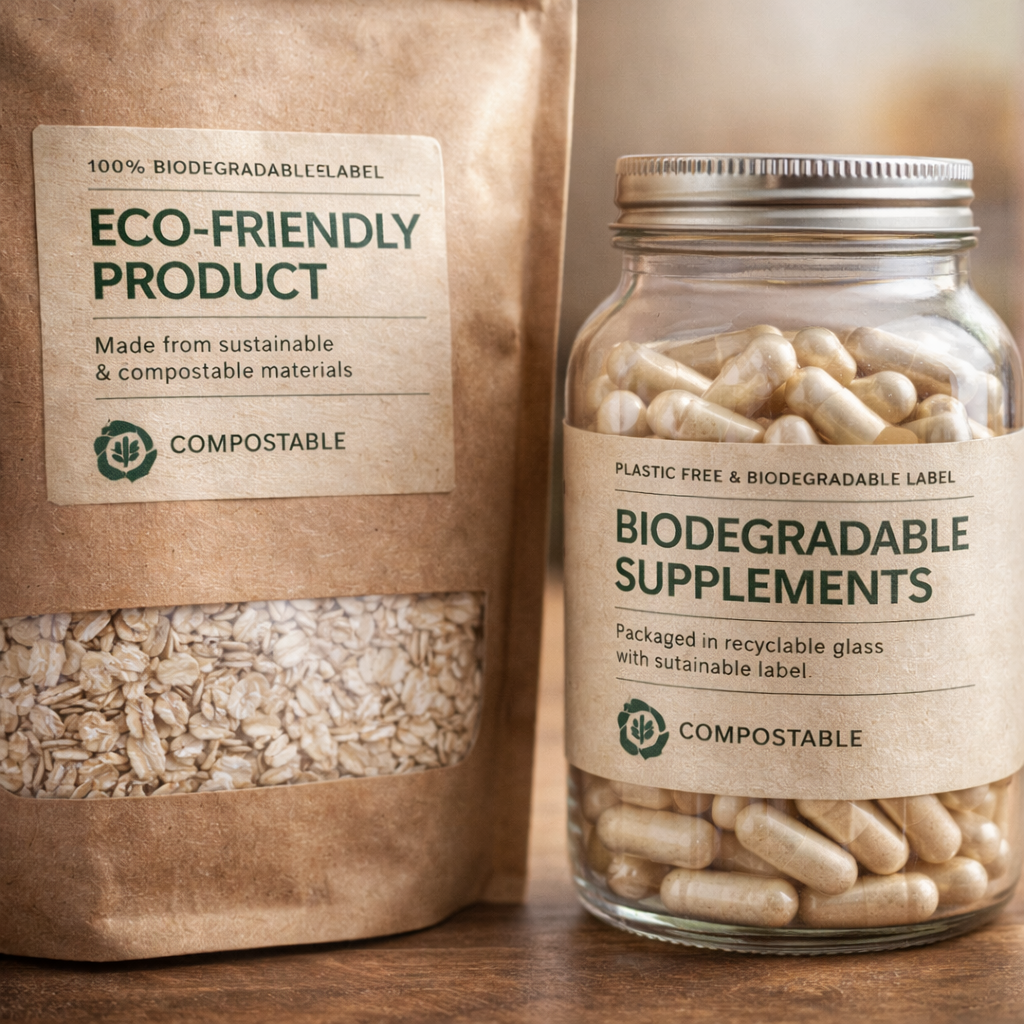
With resin prices surging due to global supply disruptions and Extended Producer Responsibility fees adding further cost pressure, many businesses are questioning whether biodegradable labels remain a worthwhile investment in 2026. The answer is nuanced: they can still be smart for the right applications, but the economics have become more challenging and require careful evaluation.
Why Biodegradable Label Costs Have Risen
Biodegradable and compostable labels typically rely on materials such as PLA (polylactic acid), PHA, or specially formulated bio-based films. Many of these materials depend on the same petrochemical feedstocks or processing chemicals that have been affected by disruptions in the Strait of Hormuz. As virgin resin prices climb 35–50% or more in key grades, the cost of bio-based alternatives has also increased, sometimes even more sharply because of limited production capacity and higher processing costs.
Converters are reporting that biodegradable label stock is now 20–40% more expensive than comparable conventional films in many cases. This narrows the traditional premium and forces buyers to justify the extra cost through clear environmental or regulatory benefits.
When Biodegradable Labels Still Make Strong Commercial Sense
Biodegradable labels remain a smart choice in several situations. Brands targeting eco-conscious consumers, particularly in cosmetics, food, and personal care, can use them to strengthen sustainability credentials and justify premium positioning. In sectors where compostable packaging is becoming a market expectation or a regulatory requirement, switching away from biodegradable options could damage brand reputation.
They also perform well for products with short shelf lives or those destined for industrial or home composting streams. When paired with compostable adhesives and inks, the entire label system can break down without leaving microplastics, offering a genuine end-of-life advantage over conventional plastic labels.
The Challenges in the Current Market
Higher material prices mean the payback period for choosing biodegradable labels has lengthened. Businesses with tight margins or high-volume runs are finding it harder to absorb the premium. Additionally, not all “biodegradable” claims are equal — some materials require specific industrial composting conditions that are not widely available, which can lead to greenwashing concerns or customer disappointment.
EPR modulated fees add another layer of complexity. While genuinely compostable packaging may qualify for better recyclability ratings in some schemes, the assessment is not always straightforward, and poor performance in real-world waste streams can still result in higher fees.
Practical Ways to Make Biodegradable Labels More Cost-Effective
Several strategies can help improve the business case:
- Combine biodegradable facestocks with thinner gauges or hybrid constructions to reduce overall material usage.
- Use peel & reveal or smart labels with QR codes to maximise information density and minimise the physical label area required.
- Focus biodegradable labels on high-visibility or premium product lines where the environmental story delivers clear marketing value.
- Lock in longer-term supply agreements with converters who specialise in bio-based materials to stabilise pricing.
- Explore certified home-compostable options where infrastructure supports them, as these can command stronger consumer preference.
Biodegradable labels are not automatically the best choice in 2026, but they can still be a smart strategic decision for brands that prioritise sustainability and have customers willing to support it. The key is to be selective — apply them where they deliver the greatest environmental and commercial return rather than across the entire range.